
In Singapore’s rapidly digitising business landscape, protecting sensitive data has become more challenging than ever. A recent study revealed that organisations in Singapore experience an average of 10 data loss incidents annually, with 45% of these breaches attributed to careless employees or contractors. For small and medium enterprises (SMEs), a single data breach can result in regulatory fines, reputational damage, and loss of customer trust.
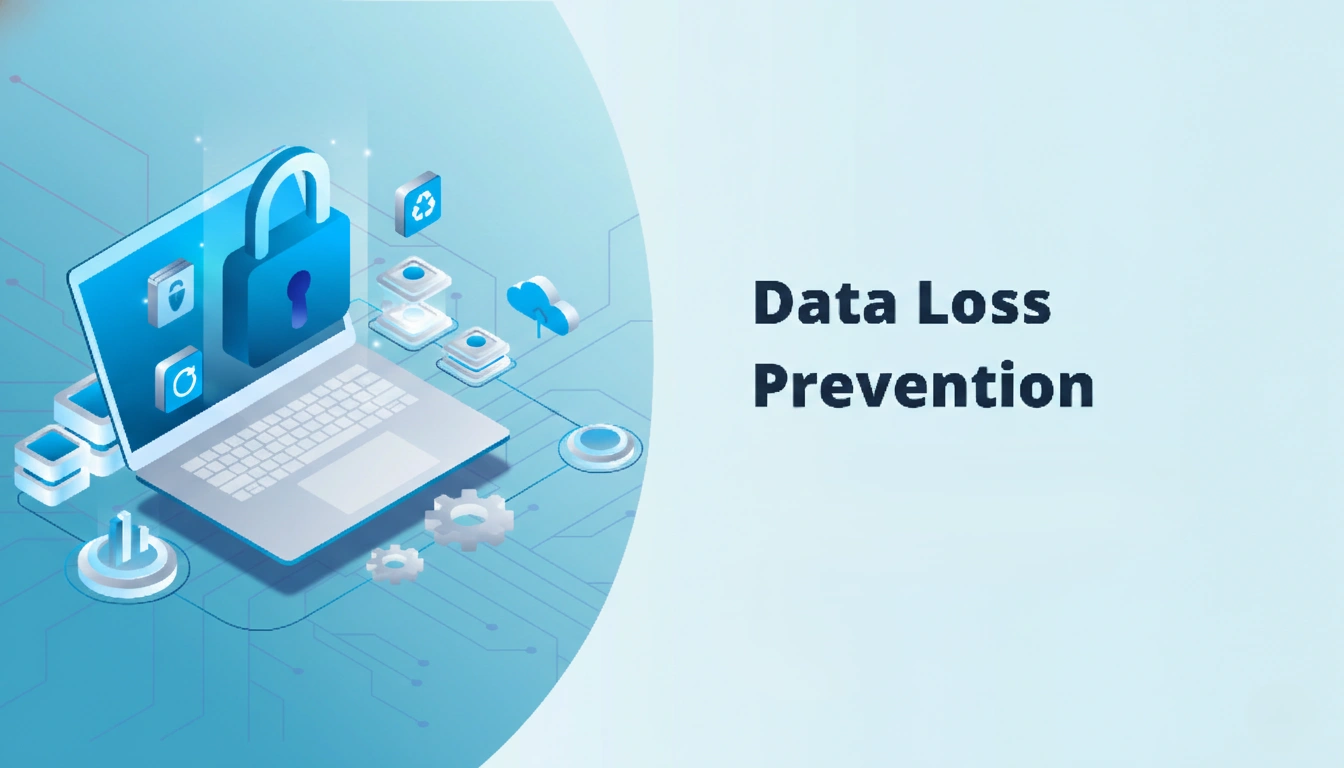
Data Loss Prevention (DLP) policies aren’t just about ticking compliance boxes. They’re essential safeguards that help your business prevent insider threats, protect confidential information, and maintain operational resilience. Whether you’re managing customer data, intellectual property, or financial records, implementing robust DLP measures is no longer optional in today’s threat landscape.
Understanding Data Loss Prevention: More Than Just Technology
Data Loss Prevention refers to a comprehensive strategy that combines technology, policies, and processes to prevent sensitive information from leaving your organisation without authorisation. Unlike traditional security measures that focus on external threats, DLP specifically addresses the reality that most data breaches originate from within.
Consider this: research shows that just 1% of users are responsible for 76% of data loss events. This statistic highlights a critical insight-your biggest security vulnerability might not be sophisticated hackers, but everyday employees who accidentally forward confidential emails, download files to personal devices, or use unsecured cloud services.
A well-designed DLP policy helps you identify what data needs protection, monitor how it’s being used, and automatically prevent unauthorised sharing or exfiltration. For Singapore businesses subject to the Personal Data Protection Act (PDPA), this becomes particularly important for maintaining compliance and avoiding penalties.
The Three Main Categories of Insider Threats

Not all insider threats are created equal. Understanding the different types helps you design more effective DLP policies:
1. Careless Employees
These are well-intentioned staff members who inadvertently cause data leaks through poor security practices. They might use weak passwords, fall for phishing emails, or accidentally share sensitive documents with the wrong recipients. According to Singapore-specific data, careless employees represent the largest category of insider threats.
2. Compromised Users
These are employees whose credentials have been stolen by external attackers. The attacker then uses legitimate access to exfiltrate data without triggering traditional security alerts. With 38% of Singapore organisations citing compromised users as a significant concern, multi-factor authentication and behaviour monitoring become essential.
3. Malicious Insiders
Though less common, malicious insiders pose the greatest risk. These individuals deliberately steal data for financial gain, competitive advantage, or revenge. They understand your security systems and can exploit gaps more effectively than external attackers.
Building Effective DLP Policies for Your Organisation

Creating a DLP strategy that actually works requires more than purchasing software. It demands a thoughtful approach that balances security with productivity.
1. Start with Data Discovery
You cannot protect what you don’t know exists. Begin by conducting a comprehensive audit of your data. Where does sensitive information reside? Who has access to it? How is it being shared? Many organisations discover that confidential data has proliferated across SharePoint, cloud services, email systems, and endpoint devices, creating what security professionals call “data sprawl.”
2. Classify Your Information
Not all data requires the same level of protection. Develop a classification system that categorises information based on sensitivity. For instance, public marketing materials need minimal protection, whilst customer financial records or proprietary intellectual property require stringent controls. Singapore businesses should pay particular attention to personal data that falls under PDPA regulations.
3. Implement Endpoint Security Controls
With remote work becoming standard, endpoints like laptops and mobile devices have become major data loss vectors. Modern endpoint security solutions can monitor file activities, detect suspicious behaviour, and prevent unauthorised data transfers to USB drives or personal cloud accounts. Solutions like SOPHOS Endpoint Protection offer comprehensive monitoring whilst maintaining low resource usage that won’t slow down employee productivity.
4. Establish Clear Usage Policies
Technology alone won’t prevent data loss. Your employees need clear guidelines about acceptable data handling practices. Document policies around email attachments, cloud service usage, mobile device management, and remote access. More importantly, ensure these policies are communicated effectively through regular training sessions.
The Role of Monitoring and Response
Prevention is important, but you also need visibility into ongoing data activities. Continuous monitoring helps you detect anomalies that might indicate a security incident. For example, if an employee who typically accesses 10 files per day suddenly downloads 1,000 documents, this pattern should trigger an alert.
Modern DLP solutions use artificial intelligence to establish baselines for normal user behaviour and flag deviations. This approach reduces false positives whilst identifying genuine threats more quickly. When Singapore organisations reported that resolving data loss incidents can take one to four weeks, the importance of rapid detection becomes clear.
Consider implementing a Security Information and Event Management (SIEM) system that gives you real-time threat detection and automated response capabilities. This centralised approach provides comprehensive visibility across your entire IT infrastructure, from network traffic to endpoint activities.
Addressing the GenAI Challenge

The rise of generative AI tools like ChatGPT presents new DLP challenges. Nearly half of Singapore organisations lack adequate visibility into how employees use these platforms. An employee might copy sensitive customer data into a public AI tool for analysis, inadvertently exposing confidential information that could be used in the AI’s training data.
Your DLP policies should specifically address AI tool usage. This might include blocking access to public AI platforms from corporate devices, implementing enterprise AI solutions with proper data governance, or requiring approval before using AI tools with sensitive information.
Compliance Considerations for Singapore Businesses
Beyond protecting your business, effective DLP policies help you maintain compliance with Singapore’s regulatory framework. The PDPA requires organisations to implement reasonable security measures to protect personal data. In the event of a data breach, you must demonstrate that you had appropriate safeguards in place.
Regular audits, documented policies, and evidence of employee training all help demonstrate compliance. More importantly, they reduce the likelihood of enforcement action or penalties from the Personal Data Protection Commission.
Moving Forward: Making DLP Work for Your Business
Implementing DLP doesn’t mean creating a fortress that hampers productivity. The goal is to enable secure collaboration whilst preventing unauthorised data loss. Start with these practical steps:
✔ Conduct a data inventory and risk assessment
✔ Define clear data classification standards
✔ Deploy endpoint security and monitoring tools
✔ Create comprehensive but practical usage policies
✔ Train employees on data security best practices
✔ Establish incident response procedures
✔ Regularly review and update your DLP strategy
Remember, data security is not a one-time project but an ongoing process. As your business grows and new technologies emerge, your DLP policies need to adapt accordingly.
Protect Your Business Data with Expert Guidance

At Entrust Network Services, we’ve been helping Singapore SMEs and enterprises secure their IT infrastructure since 2006. Our team of certified cybersecurity consultants understands the unique challenges facing local businesses, from PDPA compliance to protecting against sophisticated insider threats.
We offer comprehensive DLP solutions that combine advanced endpoint security, 24/7 monitoring, and practical policies tailored to your industry. As your trusted IT partner, we become part of your team, delivering proactive protection that lets you focus on growing your business.
Don’t wait for a data breach to expose your vulnerabilities. Contact Entrust Network today for a no-obligation cybersecurity assessment. Let’s work together to build a DLP strategy that protects your most valuable asset: your data.
